
Comix Zone Gameplay
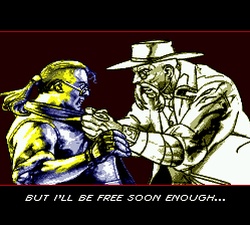
Comix Zone doesn’t do hallways — it’s a strip of panels, a sequence of frames, and you’re hopping from box to box like a hero who just leapt off the page. You feel it in your bones: the panel border is the world’s edge, a corner is cover, and speech bubbles and those WHAM! and POW! sound effects drum the beat of your brawls. It plays in measures: scrap, catch a breath, burst into the next frame, hit a fork and scan for the smarter turn. You’re not just moving forward — you’re turning pages.
Combat rhythm and panels
Sketch Turner hits short and snappy. A couple of jabs, a sweep, an elbow — then a toss into the frame edge that crumples the enemy like a wrinkled page. Combos flow naturally: stagger with a strike, scoop with a kick, finish with an uppercut — all while minding your spacing. Don’t just mash through everything: props and scenery aren’t just scenery. In Comix Zone, every dumb move dings your health; smash a crate and be ready to pay — the paper “scratches.” It sounds small, but those tiny stings shape a Comix Zone run: you learn to hit clean, budget your tools, and nail the timing.
The controls don’t weigh you down — the tempo does. While you trade blows, Mortus’s hand slides in from the page gutter and inks a new abomination in a second, forcing you to pivot. Enemies love to pinch from both sides, spring off jumps, snare your block. It feels like dueling a director who’s rewriting the scene live. Sometimes the best attack is a step back: bait a whiff, let them eat spikes, shove them into acid — make the panels work for you. Fights stay tight: a short panel corridor, two or three goons, every exchange cutting like a hard edit.
The trick is in the cadence. You hold a hit the way you hold a line. In Comix Zone even a hop between frames is part of the combo: vault over, land behind, shoulder-throw at once. Bubbles fill with interjections, and you catch another feeling — the scene doesn’t repeat. Every spread rewrites combat logic: sometimes you break shields, sometimes you grind the slide, sometimes you get crafty and swap to items.
Items, the rat, and the paper
Inventory’s small — three slots — but every pickup matters. Knives and grenades solve positioning puzzles, iced tea yanks you out of danger, odd gadgets are life jackets on a rough strip. The MVP is Roadkill, the little rat with a nose for secrets. Let him loose and he zips into cracks, flips the right switch, bridges wires, and finds what your eye skipped. Without him some puzzles won’t open; he’s your highlighter, underlining the margins.
Then there’s the paper magic. Sketch tears a chunk of page and folds it into a paper plane that sails to a lever across an acid pool or slips past a turret. Sometimes you literally have to “rip” the scene to move on — not a metaphor: the whole level logic hinges on a living comic. You listen for the rip and tear as audio cues and memorize: here you can break a border, there you can set a prop on fire, and that display stand? Better avoid it or ink floods half the screen.
Traps, branches, and a sense of path
Panel-rooms rarely end head-on. Ladders lead to alternate frames, the underbelly drops you to the “bottom of the page,” and the top route looks shorter — until the traps spring. Comix Zone is generous with branches: pick the left path for an extra scrap and a shot at a med kit; jump right to skip the brawl but face a trick mechanic and burn an item. Secrets ride on that choice: you learn to hear the paper rustle, read the background hatching, and tell a harmless brushstroke from a hint at a stash. Roadkill sniffs along the border while you mutter old-guide mantras: “kill the fan, then smash the grate.”
Traps are fair. Acid bubbles, spikes click, beams groan before they drop. Enemies nudge you into errors: backpedal and you hit the edge, lose focus and they hurl you into a live wire. But the game winks back: most “impossible” bits have a workaround, and a sharp eye catches a weak stroke in the art — a thin line you can walk or a lever’s little “tail” peeking out. Those aha moments spawn the mini-secrets and tells that keep people replaying Comix Zone again and again.
Bosses and the endgame tempo
Bosses flip the speed. Before a fight, Mortus literally draws the monster in front of you and the panel locks. It’s less about punching and more about reading the art: sometimes you smash generators, sometimes you hide behind a column, sometimes you ration items and sip every drop of iced tea. The battles feel like a duel with the page — you dismantle its elements to break into the next frame. When it heats up, your hands go to muscle memory: sweep near the edge, slip under a swing, toss them into a hazard. Every win is short, sharp, and personal.
The deeper you go, the denser the weave. Panels flip rhythm on a dime, and you catch yourself reading levels like a comic: panel, cut, punchline. Somewhere the game gives a breather — a tiny stash room — then slams you with a flurry. You stop thinking about labels, platforms, or dates — you just live in the strip like before. Comix Zone — call it what you want — feels the same: paper rustles, fists ring, the rat darts into a crack, and you claw a path out of ink. Every frame is its own little fight for a spot on the next page and for that ending you want to reach with your own hands.